September 5, 2017

Cycling Help #1 - Why Bib Shorts?

Why Bib Shorts - By Pactimo

If you’re reading this you could be new to cycling or a veteran cyclist—either way, you’re curious why so many roadies and mountain bikers choose bibs over regular bike shorts.

Making the switch to bibs comes with a certain hesitancy. Not just for new cyclists. Even riders with years of experience and tens of thousands of miles behind them are reluctant to give bibs a try. Why the resistance? Generally, it’s the leotard look of bibs. For some, it’s intimidating to imagine themselves wearing something as silly or dopey looking as bibs.
This article will hopefully shed some light on why so many people love them and why you may never go back to traditional shorts once you’ve make the switch.
cycling bib shorts
Bib shorts are not just regular shorts with suspenders added. That is, however, how they got their start. Racers would yank out the drawstrings and use old-fashioned clip-on suspenders to hold their shorts in place instead. Today, the suspenders are integrated into the short, are not removable, and are designed using Lycra or mesh to be lightweight, breathable and easy on your shoulders.

Here’s a few reasons why bibs are so popular:

1. There’s no waistband.

Since there’s no waistband, there’s also no drawstring or itchy, uncomfortable elastic cutting into your abdomen. You’re less likely to feel as if your blood flow and oxygen intake through deep diaphragmatic breathing is being restricted. Therefore, you’ll feel more productive in the saddle, especially over long distances. Another drawback to the traditional waistband is that they collect and retain moisture, which increases the potential for chafing and overall likelihood of discomfort. Bib shorts will leave you feeling completely free and comfortable in the torso.

2. The chamois stays in place.

Traditional cycling shorts will end up slipping down over time, and that means the chamois, or pad, will shift as well. Keeping the chamois in place will ensure there is less potential for chafing, saddle sores, and generally unhappy times. Bib shorts by nature are designed in a way that guarantees the chamois stays perfectly in place.
Learn more about our 12-Hour Summit Stratos chamois, the endurance-level Summit chamois and the race-level Ascent chamois.


3. Bib straps increase comfort.

As mentioned above, bib shorts utilize lightweight, breathable mesh or Lycra straps over the shoulders. While there are a number of advantages to shoulder straps, the biggest benefit is how they comfortably hold the bib as a whole in place without creating pressure or binding points anywhere on the body. Properly fitting bib shorts should disappear when you are in your natural cycling position. You won’t feel anything tugging, binding or chaffing. Our Summit and Ascent bibs are designed with Silhouette™ Engineering, a natural bend or articulation that mimics the contour of your body when you’re on your bike. This articulation means you experience total and complete comfort when on your bike because of a reduction in fabric bunching.

4. Showing off doesn’t mean showing skin.

The best designed cycling jerseys are shorter in the front to reduce fabric bunching and provide a more aerodynamic fit. For taller riders with traditional shorts that might mean they’ll be sporting the bare midriff when they’re not actually on their bike. With bib shorts being obviously cut higher than a traditional short, a seamless transition between shorts and jersey is maintained at all times. To the onlooker, your bib short and cycling jersey will look just like a jersey and traditional short would; to the wearer though, the difference is as stark as night and day. This is the same from the rear. You won’t ever be tormenting those behind you with an unsightly “plumber’s crack.”
If you’re already a convert to bib shorts you’ll likely agree with the points outlined above. Most cyclists who have converted to bibs have also said they’d never go back to traditional shorts.

September 21, 2014

Cross Revolutions #1 - Silver Lake

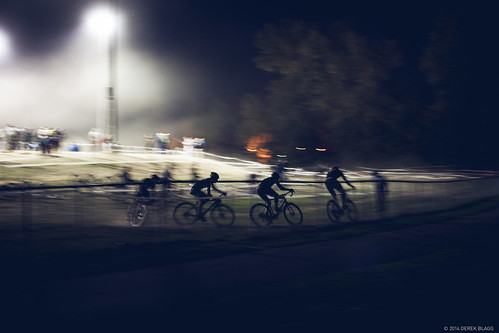
  Today was the first race of a brand new CX series here in the Seattle area, an offshoot of the old Seattle CX series. Located at the beach of Silver Lake, this course was very similar to the MFG course from last year. Temperatures were again high (mid-80s) to continue our string of summer-cross races. I was feeling great after the rough race last weekend and was ready to stretch my legs in the new series.
  As I mentioned, the course was similar to last year's MFG event. Starting on the asphalt near the beach, we went south before a a sweeping asphalt corner left into an immediate 180 on grass. The next few sweeping corners and 180s worked through some bouncy grass before we climbed up the hillside. A left around the barn at the top of the hill sent you into a singletrack wooded section. Next a tight s-curve took us into a straightaway past the pits before a series of off-camber downhill corners.
  At the base of the hill we shot into the beach for the first section of sand. Along this route of sand there were 3 drainage channels that interrupted the flow. After the sand we worked our way up the hill on the north edge of the park. A log along the course forced a dismount before an asphalt climb to the top. Once the summit was reached, the course transitioned into a flowing singletrack section that wound its way back down to the beach for a longer stretch back to the southern end of the park. The entry to this section was very loose and required keeping a flow and working through the sand. After the loose start the sand firmed up and it was easier to power through. From here the course worked back up the southern hill and into a barrier/run-up before another series of winding off-camber switchbacks rolled the race back to the asphalt start-finish.
  I started the race with a second-row position and managed to stay toward the front into the first corner. As we worked through the first section of the course I moved up a few spots, which was helpful heading into the single-track section. I continued to power through the first lap and moved into 8th place for the start of lap 2. I continued to chase toward the leaders as we tore up the course. A rider up ahead bumbled in the north-end of the course and I squeezed past him to move into 7th place. I held this position for the entire 3rd lap and was building a decent gap on the riders behind me, chasing the rabbit of the rider who was just up the road.
  Lap 4 was the start of trouble. Heading toward the north section through the sand I accidentally caught the sharp edge of one of the drainage lines. The sharp impact burped out some of the air from my front tire, but luckily it sealed up again and I was able to continue racing along. I was careful to be a bit more cautious as I worked through the singletrack and back to the beach. I worked past the loose initial section but ended up on the wrong side of the course tape (due to another rider crashing in the sand earlier). As I made my way back to the correct section, the rider who was behind me came racing past. I was immediately energized to chase him down. As we worked through the southern hill section I was gaining back the lost ground. I was breathing down the racer's back as we made the last few corners toward the start-finish. As we made the last corner I caught a root and it was enough to end the hold of my tire to the rim - burp!
  Since I didn't have a pit-bike or spare wheels at the race, my race was over. I was definitely disappointed, especially because I was in 8th place and was getting so close to being in 7th again. The next racer was seconds behind, so I was almost guaranteed to top-10 - even better since Silverlake is a race I usually don't do well. So, a mixed blessing of doing well and the disappointment of the mechanical DNF. Next weekend will be the second race of the MFG series and will be at Steilacoom (a race that I do well at), so I will be amped to perform there. Check back for the result

September 16, 2014

Starcrossed 2014

  Starcrossed 2014 is in the books. This year the race was no longer UCI ranked, meaning that the Elite race would be Pro/1/2 instead of Pro/1 only, meaning that I would be lining up for the big race, the main event. This was both exciting and unnerving as I looked over the entry list. I have raced against some of these guys as they cleaned up the local races, however this would be the first time I was in an event they were all battling with other pros for a coveted purse ($2500 for first place!).
  I arrived early to the event to ensure plenty of course recon and pre-ride time. It was a hot day (upper 80s) but since we raced at 8pm, the temperature would luckily drop a little by then. The course was very similar to previous editions of the race, featuring a mixture of tight hairpins and longer straights the cut through and around the Marymoor velodrome in Redmond. Also, as usual for this race, the ground was hard, rutted, and dusty.
  The starting chute had been relocated to the backside of the course and dumped you into the dirt access road along the back of the velodrome. From here the course shot over a rough section of grass before a corner along the fence and out toward the front along another rough section. At the end of the straight the course popped over a small raise before a 90-degree turn to the left and another sprint over bumpy grass. This sprint ended with a small gravel/asphalt section that cut through the fence and a 180 to sprint back out toward the highway. A 90-degree left threw you in a straight heading right for one of the night spot-lights before a 180 and back toward the fence. Here an off-camber 90-degree right led into a long bouncy stretch along the team tents before a 180 and into the velodrome park again. A small climb up the embankment of the velodrome before a drop down the hill and a sharp 90-degree left up the hill over a series of log barriers. At the top of the logs it was immediately back on the bike and down the hill into a washed-out 90-degree left along with the entrance to the pits. Powering along the side of the velodrome, we would then race to the back entrance to the track and dump into the infield. A series of winding corners would trace along the infield before the finish-line sprint (very bouncy). After the line, the course hooked left and then right and shot the racers onto the velodrome track to race toward the front of the course. A tight right turn to reenter the infield before a sharp right and a straight into the beer-garden barriers. The sandy exit from the barriers led to the front track entry and we were back out of the velodrome. A few winding corners took us up and down the velodrome hill a few times before sprinting along the back grounds to the other entry of the pits. Here it was another 180 corner and then a short dusty sprint back to the access road to begin again.
  After a few pre-ride laps of the course, I definitely was remembering last year and how the course starts to wear you down. My legs were feeling strong and I was ready to race, however the ladies would have the course first. I spent my time warming up more, making sure I was hydrated and fueled, and psyched up for the hour of racing ahead of me. As I expected, the temperature started to drop as the sun went behind the horizon and darkness rolled in. My field began to line up outside the course, and it was again impressive to be part of a race featuring big names like Carl Decker (Giant Factory Racing), Zach McDonald (KCCX Elite Cyclocross), Barry Wicks and Spencer Paxson (Kona), Russell Stevenson (2013 35+ World CX Champion), and even Oregon framebuilder Ira Ryan. Since I am not a Pro or Cat 1 racer, I was happy with my 4th row starting position.
  At the gun, we were off. I had a good start and moved past some of the other racers in my area as we wrapped along the back of the course. We continued to haul ass along the course for the entire first lap, people battling for positions and working through the field of racers. I was definitely feeling fast and was rubbing elbows with some big racers. Even though I was running low pressure (~22psi) in my tires, and riding a titanium bike (which theoretically imparts some vibration relief), the course was bouncy and rough. The dust, which in the past has been near-blinding in some areas, was relatively light for our race, and I only really thought about it being dusty on the lead into the dirt access road that formed the back straightaway.
  The race started to fall apart on the 3rd lap, as the leaders broke free to form a crazy battle upfront for the huge prize. I continued to lay it out and managed to stay in the "main" group, roughly the 3rd bunch on the course. We were hustling to keep up the pace and make sure the riders behind us were struggling to keep in-sight. I was feeling strong and we continued at this pace for a few more laps, trading blows and slowly pulling further from the racers behind us.
  With a few laps to go I started to feel the fatigue. I could definitely tell that our group was slowing down and we started to make little mistakes. I dropped my chain by the pits and had to sprint back on, a racer unclipped mid-corner slowing everyone behind him, another rider slid out too far in a corner and caused some more slowing. I managed to clear some of the riders who fell out of power early, and managed to hold tough for a little longer. With about 2 laps to go, a racer strongly passed me, lighting a fire to chase him. I managed to do well holding him in for that lap, but starting the final lap my legs were feeling leaden. Heading toward the front of the course I was passed by another racer who I often benchmark off. I was disappointed that he got around me and that I was too gassed to chase him back. I just kept churning along to keep him in-sight and managed to finish slightly behind him, ending the race in 20th place of 30 finishers (9 DNFS). Given the mixture of the field, I am pretty happy with the result and hope to continue the season moving forward. Thanks to all the folks out there supporting me, and look forward to bringing in the big results for the rest of the races.
See you next week for Cross Revolutions #1 at Silver Lake.

September 9, 2014

MFG 2014 #1 - Lake Sammamish

  Well, here we are. The 2014 CX season has begun and I am again racing the best of the NW in the Elite category. Unlike the usual MFG starter at Big Finn Hill park in Juanita, we instead begin the season along the beautiful Lake Sammamish in Issaquah. A wonderful Summer spilled into the weekend with bright sunny skies and temperatures rising into the mid-high 80s - definitely feels like Summer-cross to me!
  With some construction in the park, the MFG crew chose to mix things up with an entirely new course with the added twist of running the opposite direction of the past editions. This lead to an entirely new course feel, although the running along the beaches retained the leg-sapping efficiency of earlier years. Utilizing the sporadic trees, rutted and bumpy grass fields, and three stretches of sand, the course was an ideal mix of technical maneuvering, power, and running finesse.

  Our Elite race began at the end of the day, ensuring that the sand was hardly ride-able and the looser off-camber sections were torn-up and rut-filled. Under the Summer heat, we lined up for the next hour of pain. I was lucky to receive a random call-up to start in the front row - a great way to start the season since it would mean less traffic in the early corners. As the whistle blew I clipped in and started to sprint down the stretch, only to have my starting foot pop loose (looks like it is time to tighten those pedal-releases)! I managed to clip in and get charging again, however I was now mixing it up at the back of the pack - so much for that call-up...
  Diving into the first corners, I worked my way past some racers and tried to move to the front of the race. As we hit the first section of sand I was able to quickly navigate the winding riders and move up further. This happened again shortly after during the second sand stretch which occurred almost immediately afterward. I then powered through the winding course as it negotiated the trees and off-camber hills on the way toward the beach. Running along the 3rd section of sand was guaranteed for all racers due to the sharp hairpin entry and churned, loose sand. This section of beach was also the longest and left you drained by the end. I made up a few more spots here before we turned back into the trees and shot back toward the main part of the park. Flying out of the trees into a bumpy section of grass, we passed the pits and make a 180 to enter the double barriers before another 180. I was making up ground and could see the leaders just ahead! A few more bumpy stretches and corners lead to the pavement for a drag-race through the start/finish and begin the next lap.
  Our laps were taking ~6 minutes, so we would end up completing 9 laps of the course. I managed to move up a little more over the next two laps before getting caught in complete no-man's-land and then getting caught by two racers behind me. We worked together for the next few laps, taking turns of ripping each others legs off as we raced along. This continued until lap 7 when I became unglued and began to yo-yo off the back. I managed to catch back on before lap 8 and then fall off again during the start of that lap. However, one of the riders messed up a corner and I then flew passed him. I was now chasing after the other rider (Mike Dicenso) and trying to catch his tail.
  As we entered the final lap, I was feeling drained from the heat and exertion, however there were only a few minutes of pain left - leave it all on the course! I powered along the course toward the fleeting figure up the road. I managed to pass another rider who was completely burned-out along the final sand section and felt like I was making great progress. Back out into the main field and I flew into the barriers a final time. I had a mounting hiccup and ran wider than I usually did, figuring it wouldn't be an issue. Unfortunately, another rider had caught up to me and used the bumble as a perfect opportunity to pass. I immediately noticed the blunder and powered along to hold his wheel. With only a minute of racing left I was struggling to hold on and once we hit the pavement and he was still leading I knew I wasn't going to catch him for this race. We screamed down the pavement and finished the first CX race of the season. My official finishing placing - 9th (3 minutes behind the 2 leaders of the race) of the 22 starters. Not a terrible way to start the season since that was my overall best placement in a race last season and here I was starting there.
  After some water (boy that was a hot race!) and cooling down, it was nice to chat with some of my competitors and look forward to a great season of racing. I was very happy with how my new On-One Pickenflick handled the course. The titanium frame was light for the long portaging across the sand, stiff under the continual accelerations, and comfortable over the rough and bumpy course. I guess the awesome Shimano Di2 and hydraulics couldn't have hurt the performance either!
  Next weekend is the big Starcrossed race, with the Elite race beginning at 8pm! That should be fun as the night race is always a crazy affair. See you then.

June 24, 2014

On-One Pickenflick

Alright, now that I have had time to adjust position and put in some miles, I am ready to lift the curtain and reveal my new cyclocross bike, my primary race rig for the 2014 season. After spending much of last season adjusting to the BARON, I  finally decided it just wasn't the right fit for my racing needs. It was a beautiful and lightweight steel racing machine, but something about the geometry and position compared to my Independent Fabrication Planet X made for never really feeling quite right. At the end of the season I knew I would be looking for a new race machine to pilot for 2014 (and hopefully to an even better season).

As many cyclocross racers know, last year was a big revolution in the CX world as the UCI and bike manufacturers finally embraced disc brakes in a big way, and the results on disc-equipped bikes kept rolling in. I have been riding a winter/commuter with cable-driven Avid BB7 brakes for a few years, so I knew about the benefits and downsides of the systems: improved braking performance under all weather conditions, more clearance for fenders (or mud!), as well as issues like increased weight and brake noise due to the pad tolerances. The weight issue was originally a deal-breaker for me, since I (like many racers) didn't see a need for the increased brake strength. After the news of many adventurous disc-adopters having braking issues at the 2012/13 US nationals, I figured it would definitely be a few years before I would try to race on a disc setup. This all started to change right before (and during) race season in 2013. Shimano and SRAM were both launching hydraulic systems for CX use (modifying the successful systems they offer to the mountain bike crowds to work with drop-bars and road shifters). These systems would cut weight from a full-length cable-driven system and offer better modulation and rotor-pad clearance. With these changes, racers were noticing that they could brake later, and as such be faster around the course than a lighter canti-equipped bike.

Back to my bike hunt, I was now thinking that disc brakes might be an option. I began by looking into the common bikes, but after all my experience with steel bikes, I knew that I preferred that ride-quality to the harsher efficiency that I experienced with aluminum frames. Carbon bikes are definitely the best way to get a lightweight machine, and I started looking in this route. After some research and reading of reviews, I became interested in the On-One Dirty-Disco - a no-fuss frame from a company that has been doing the direct-to-customer deal for a number of years. On-One is part of the Planet-X family and distributed in the US out of Portland (something nice to know as it means they are close if I need anything). As I did more research on the bikes, I came across the blog of a Mr Alan Dorrington (CrossJunkie) who races for Planet-X/On-One over in England. Reading the blog, I came across the prototype titanium bike that On-One was developing. Immediately I became intrigued in this bike, the Pickenflick. It seemed to check all the boxes for a bike that would excel in the racing conditions we face out here in the Pacific Northwest (mud!). It features a lightweight titanium frame, massive clearance, and shaped tubing to aid in power-delivery as well as portaging.

Now that I was thoroughly interested, I began searching for more information on this machine. Due to the relatively small production run and recency of its release, there was surprisingly little online about the bike. After pouring over the CrossJunkie blog more, I reached out the the folks at Planet-X USA for more information. Brandon, their head of customer service, was great to deal with and we began discussing a custom Di2 bike they had built up for SeaOtter earlier this year. I met Brandon when they came up for the Evergreen Bike Alliance event at Duthie Hill. We talked more about the company, racing, and their line-up (which also includes Titus Titanium bikes) We hadn't finalized everything on the Pickenflick, so I couldn't ride away with it that day, however it arrived nicely boxed up just a few days later (see my earlier teaser post to see the awesome packing job).
I have now done some sizing adjustments and a few little trail rides around my house to get the bike fitted out and sort out any other quirks. While I haven't had a chance to put it through any all-out racing experience, I have laid out some power to get a feel for how the Pickenflick will handle the racing this Fall/Winter. Needless to say, I am very happy with everything. The massive chainstays transfer the power without any needless flex, though the chainstay/seatstays still absorb some of the bumps just as you expect from a steel or titanium bike. The head-tube is sculpted beautifully to handle the custom full-carbon tapered fork (which has plenty of clearance for any kind of mud I can throw at it). The top-tube is nicely ovalized to reduce pressure on your shoulder during portage (nicely tested with a few series of stairs I run up on my CX training route). The down-tube is also sculpted to enhance front-end stiffness and aid in pick-up, much like Specialized does on their Crux bikes.

The bike offers bottle mounts for 2 bottles (good for longer training rides), however it is aimed at race performance and so it skips add-ons like fender and rack mounts (who wants those on a race bike anyhow!). On-One designed the bike around a mountain bike 2x crankset, however the 36/46 on my bike fits without issue (so there is no reason to be alarmed by that notice). Mr. Dorrington said he uses the lower gearing for some of the longer trail-race events that are held in England, but some users might be interested in that gear spread to give the bike a double-duty use as a light mountain bike. Enough of me rambling on, lets check out the bike:
 Close-up of the welds (all done by hand) and the sculpted head-tube and down-tube junction.
 Clearance to spare in the rear and clean routing for the hydraulic lines.
 Sculpted head-tube and the massive clearance on the full-carbon fork.
 Good clearance around the chainstays and stiffening bridge.
 Rear brake mount and support truss to aid in braking performance of the rear end.
 Slick cable routing on the front fork keeps the lines out of harm's way.
The Shimano R785 brake/shifter features a taller body, roughly the same size as the Dura-Ace 7800 shifters (although with better ergonomics).

 Now I just need to keep riding this machine and enjoying it. The R785 Di2 Ultegra system is great (I enjoyed Di2 so much in the past that I have both of my road bikes running the 10-speed version, and so far the new 11-speed is equally amazing) and offers precision shifting without the worry about missing the timing or shifting under load. The system is coupled to Shimano's 160mm ice-tech rotors, which have proven to brake smoothly and reliably in the face of all the conditions I have put them through so far (and due to the hydraulic system, no ting-ting of rotor contact on the pads under hard sprinting or climbing). My bike is rolling on a set of DT Swiss 29er wheels, and though they are a tad overbuilt for CX racing, they are very stiff and responsive, allowing quick acceleration and steering response. I plan to put more miles on this machine quickly and should have a nice follow-up before CX season, but right now I see no reason to not grab one of these immediately if you are looking for a new race machine for the years ahead.

June 21, 2014

More Spy+ Optics

Last year we were fortunate to have SPY optics as a team sponsor (I may have been responsible for setting up the deal) and I continue to love and wear their products even though I am now buying them retail. Like many cyclists, my intro to performance sunglasses came from Oakley. While I enjoyed my Oakley glasses, I always thought they were very expensive - something that becomes apparent when you end up with scratched lenses from road debris and need to order replacements. So, when SPY launched their performance line, I was intrigued. The initial models (the Alpha and Quanta) offered lightweight models with a respectable price and great color options. With lenses that are easy to replace (both in ease of install and the dent in your wallet), they were an excellent addition to the market. SPY then released the Screw, offering the same great qualities of the earlier models with the full shield lens that many racers prefer. Working with some of the SPY team, we outfit my team with great glasses for the 2013 season.

As a follow-up from my review of the great Screw sunglasses, I was excited to finally get my hands on the newer, super-light Daft sunglasses. Going from a standard full-frame shield glass like on the Screw, the Daft moves to the ultra-light setup of just attaching arms to the shield itself, removing the frame from the lens to reduce weight. The Daft model also features a larger shield (similar to what is now offered on the Screw-Over model) to improve sight lines, and looks amazing.
 I have now been wearing the Daft sunglasses for about 4 months and through a variety of races (from rainy and long road races to fast and hot criteriums). I can definitely say that the weight reduction is nice (not that the other SPY glasses were heavy, these are just SUPER light) and the ventilation is great (no fog up yet!). Unlike what I have heard about some lens-only shield glasses, I have been able to wear these in humid, wet races while wearing a cap and have no fogging or glasses-cap contact.
 The Daft come in either a white or black frame (for now) and both models come with 2 lenses (the white model comes with a very slick green/blue mirror lens as well as a yellow lens for those wet or dark races). I am sure that SPY will continue to add colors to the lineup as they have done with the other models as well, so if you are looking for something a bit brighter, just wait. I absolutely love these glasses and look forward to racing cyclocross with them as well (I am sure the coverage will be great for keeping mud out of my eyes too). If you are in the market for some performance shades for cycling (or other sports), definitely check out the Daft.

As a cyclist, I often find myself wearing my racing glasses off the bike as well. My girlfriend finally had enough of me looking silly (race glasses don't go well with nicer clothes), so I picked up a set of the SPY Helm glasses last summer. These glasses offer a classic wayfarer-style look and fit, have SPY's high-quality lenses, and let me enjoy clear vision on any outing.
So, in continuing my review of products I enjoy, I highly recommend SPY Optic glasses, and hopefully will have an opportunity to work with them again in the future.

June 17, 2014

Getting there - WA state Road championships 2014

 This past weekend was the 2014 WA State Road championships, this year held up in Bellingham on the Northshore RR course. The course, which I have only raced once before, is only about 8 miles long, so for the Road Championship minimum distance we had to ride 10 laps. The field wasn't huge (results say 34 starters) but as it was a state championship race, the strong riders were in attendance and it wouldn't be an easy race. We started with three racers: Matt, Alec, and myself. This was Alec's first race since he crashed in March, so while he was excited to race, he wasn't sure how it would go. Matt and I both were feeling ok and decided to see how the race played out without locking into roles. We figured there would be a break at some point, so we would both watch and see if we could make the jump.

 The course is rolling and generally defined by the two climbs each lap. Starting from a local restaurant (the Fork), you immediately start a stair-step climb that takes you out toward the "official" lap point. At the top of this climb, the road flattens out (maybe even a small downhill) before an off-camber right angle turn into a small uphill. Here you then accelerate down a short hill to the lap point and make a 90-degree turn to the left. A longer flat section offers a time to sit in temporarily, although this also seems to be an area for kicking the pace up as well. At the end of this straight, the road kicks up for a short climb before the field flies into a downhill section at full speed. A sharp right turn at the bottom of the hill before another small downhill section to keep the ride at speed. Then begins the soul-draining section of the course - a long, open stretch of gradual uphill. The road looks like it is flat but actually averages around 2-3%, so you begin to feel quite drained by the later laps. At the end of this section you get a moment of rest before the 2nd climb - a longer section that kicks up toward the end (and is the site where most riders fall off the back). Once you force yourself over the crest, you are rewarded with a long winding descent back to the Fork to begin the lap again. This continues until the final lap, where instead of making the left turn at the "lap" point, you instead go straight into a short but brutally steep little hill before a flat roll over the line.

 As I mentioned earlier, the fact that the race was a championship meant that the main players were in attendance and ready to rip each others legs off. From the gun we were racing at a brisk pace, with small attacks literally going from the beginning of the race. The field stayed roughly together for the first lap, but eventually the strongest of the field managed to break away in a group that contained a large selection of HSP riders. Matt ended up in a small group in-between the fields that slowly drifted back and rejoined the main peloton. Our field got into a rhythm of rotation and were slowly closing in on the lead group after a lap or so, but couldn't close it down completely. At this point, our field was starting to lose riders - casualties of the high chasing pace. It was on lap 4 that Alec pulled the plug and rode with a few other riders on a cool-down lap before heading back to the cars.

 The reduced peloton (still containing Matt and myself) continued to work together, but the leaders had a significant gap and we wouldn't see them for the rest of the race. At this point, the race was turning into a game of attrition; it seemed that every lap would result in riders disappearing off the back. On lap 6, a strong Apex racer attacked off the front of the group and pulled away from us. The field continued to rotate, but it was disheartening that the Apex rider stayed away (I would later learn that he quit at the end of that lap, but I assumed he had caught the leaders and finished with them).

 Toward the end of lap 7 Matt and I had a short chat about how tired we were. The relentless climbing and chasing was wearing down all the riders and I could tell we had slowed down compared to previous laps. Matt asked if I intended to finish or not since he was feeling spent. Since we were soon to start lap 8 of 10, I figured that as long as I stayed with the group I could finish. At this point we had 8 riders left in the peloton. As we started lap 8, I noticed we had lost more riders and were down to 6. We started charging along the flat section and suddenly Matt was not in the rotation - I realized he had pulled the plug. Shortly afterward, the 10-Speed Hero rider (another strong engine in our little group) also disappeared. It was now just 4 of us: Starbucks, Olympic Ortho, Therapeutic Associates, and myself.

 For the rest of lap 8 and lap 9, we all rotated evenly sharing the workload of hauling toward the finish. I didn't know how many riders were up the road, but figured we were well out of the placings (and we hadn't seen anyone fall back from the lead group, so I assumed they were all together as well) so I was happy to work to get to the finish. Once we finally began lap 10 however, things definitely changed. During the flat sections the work was relatively even, but suddenly I was leading up all the hills. Going up the last hill, I could tell that the others were attempting to save something for the finish. I had been having small cramps for most of the lap, so I figured I would let them play and just ride my race. We flew by the Fork for the last time and into the stair-step climb together. As we approached the top, Starbucks took his chance and jumped ahead. The other riders looked at me to chase and then continued to sit in as I worked ahead at my own pace. We rounded the final corner and down into the finish stretch watching Starbucks stay roughly 500m ahead. Finally, as we hit the short hill, the other riders jumped past me. I stood to climb and immediately was back to seating as my legs refused to work any harder. I rolled across the line to end up 16th for the day.

 Our group ended up finishing roughly 13 minutes behind the leader. It turned out the lead group had splintered on the last laps as well, with 2nd place finishing a minute back, and 3-9 finishing another minute back from #2. #10 was about 45 seconds off that group and 11&12 finished only a minute ahead of our group. 2 more riders finished about 7 minutes behind us, and were the last people to finish (16 DNFs).

 Definitely a hard race, but I was happy to have finished, even if I did not contest my group. Now it is time for a little break before we hit the peak Criterium season.

Full Results here - Northshore RR - 2014